Rolfing™
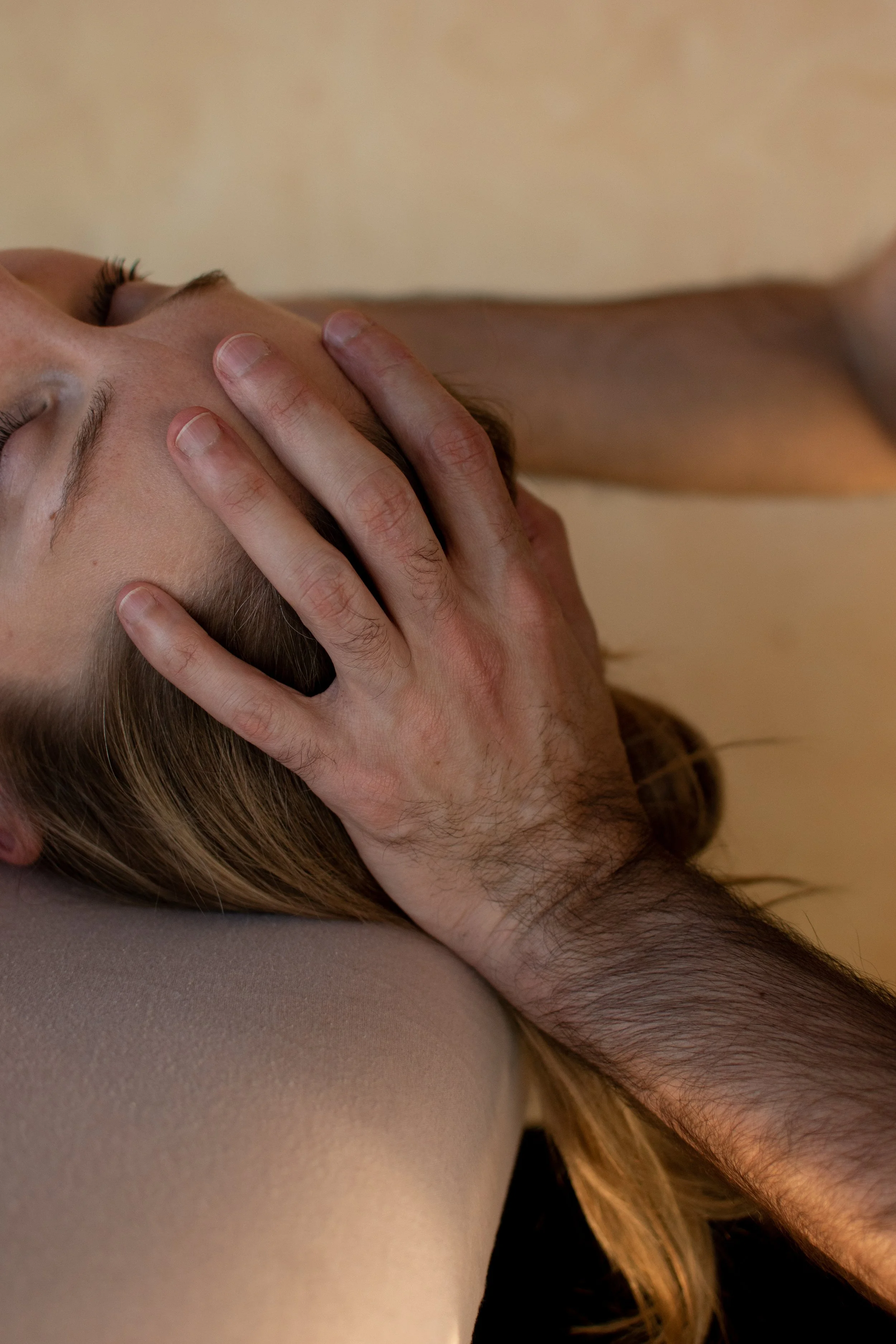
Rolfing™ is a structured learning practice that teaches you how to bring your body into better alignment and balance, enhancing flexibility and movement potential.
Through guided awareness of your body's deep structures, you discover how to release tension patterns and develop improved posture and movement efficiency.
Awareness and education about postural habits often initiates positive changes in daily life.
Your body's fascia is constantly adapting in response to how you use it. When you experience physical stress or injury, your body naturally responds protectively. Sometimes this protective response creates more restriction than necessary. Through learning and practice, you can understand these patterns and develop new movement strategies for better mobility and postural awareness.
Changing old postural habits often initiates further changes in life
Fascia is constantly changing and adapting in response to demands placed on an individual’s body.
Fascia reacts to specific physical damage – to a joint for example – by producing extra material to enhance stability and support. However, it can produce more than necessary. If this happens, over time, rather than stabilizing the joint, the healing process itself can actually reduce mobility, leading to changes in body’s posture and altered patterns of movement.

What can you expect from a Rolfing™ session?
At the beginning of each session I will do a body reading to observe your body's structure and posture.
During the session you will be positioned on a table, sit or stand while I guide you through focused exploration of specific body areas using sensitive and precise pressure.
I will invite you to bring your attention and breathing into the areas being explored, as well as follow some guided movements. I will invite you to stand and discover how you feel, stand, move and walk differently.
What you may experience through Rolfing™
• Develop greater awareness of tension patterns and release habitual holding
• Learn to improve your alignment, posture and movement patterns
• Expand your range of motion, breathing capacity and movement awareness
• Develop a greater sense of connection and presence within your body
• Increase energy and strengthen your overall body awareness
The ten sessions
Rolfing™ systematically transforms your body, beginning with the uppermost connective tissues tied to your breath. As we progress, your alignment, body awareness, and balance naturally improve.
Other issues may emerge along the way, so every session adapts fully to your unique needs and goals.
Sessions 1-3
In these initial sessions, we explore the superficial fascia layers, boosting elasticity in your chest to free your breath. You’ll gain healthier organization in the pelvis, ribcage, and shoulder girdle—plus improved support through your feet and legs.
Sessions 4-7
These sessions target deeper fascial layers, organizing your body around a vertical axis we call “the line”—bringing greater alignment, support, and fluid movement.
Sessions 8-10
By the last few sessions, the body as a whole has become more flexible and the balance has improved. In the last few sessions we pay extra attention to your body awareness and movement patterns to ensure that the changes are going to last.
Where Does Rolfing™ Come From?
Over fifty years ago, Dr. Ida Rolf discovered the body’s seamless fascial network—connective tissues that surround, support, and interpenetrate all muscles, bones, nerves, and organs as one integrated system.
Daily stress and injuries cause fascia to shorten and adhere, pulling us out of alignment. Through Rolfing™ approach, you learn to restore fascial elasticity and gliding capacity, realigning your structure for natural ease.
Dr. Rolf pioneered gravity’s role in health; modern research validates her insights.